Equity Learning Lab: Field Resources


Back in 2020, as the country was grappling with horrifying incidents of racial injustice and violence and a global pandemic, the Robert Wood Johnson Foundation funded a cohort of organizations seeking to advance their learning and progress on racial equity. This effort, called the Equity Learning Lab (ELL), involved almost 40 organizations, all of which are working on transforming health and healthcare with a focus on health equity.

When Public Equity Group began the ELL journey back in 2020, we knew that we wanted to create a space where we could share our most valuable stories, tools and resources, and insights from the ELL experience, as nothing quite like it, on its scale, had been done before. 

Explore Equity Learning Lab Resources

It is our greatest hope that these ELL resources will continue to support organizational efforts to cultivate inclusion and belonging for diverse teams, and more directly center racial equity in culture and strategy, to achieve more racially equitable outcomes. Now more than ever we are inspired to advance work that calls forth all of our community members’ beautiful talents and multiple intelligences - in service of equity and justice.

Eleventh Circuit Blocks Venture Capital Fund’s Grant Contest for Black Women-Owned Businesses


The U.S. Court of Appeals for the Eleventh Circuit blocked a contest by a venture capital fund that provided grants and other benefits to black women-owned businesses, finding the contest is likely to unlawfully discriminate based on race under 42 U.S.C. Section 1981 (Section 1981). The decision in the case brought by an activist group that seeks to eliminate racial classifications, the American Alliance for Equal Rights (Alliance), reinforces the ongoing legal scrutiny and risk of programs that exclude certain groups based on race, even if the programs seek to address or remediate historical race discrimination.

Learn more about the implications of the ruling here, from Ogletree Deakins employment law experts (including Linda Goldman, PEG advisor).

What helps us connect with people who are different from us?


An interview with John Newsome explores his experiences as a canvasser to illustrate how open communication and face-to-face interactions can foster understanding and bridge divides. John's willingness to be vulnerable and engage in genuine, face-to-face interactions allows him to connect with individuals holding a wide range of viewpoints.

Read the full interview with John here.

Corporate diversity in the crosshairs after US Supreme Court ruling


Financial Times “Corporate diversity in the crosshairs after US Supreme Court ruling” June 29, 2023.

The Supreme Court’s ruling creates hardships for organizations

[Per PEG Legal Team] the Supreme Court’s legal reasoning in the college cases could be applied in other cases aiming to end companies’ ability to use race as a factor in training, leadership and mentorship programmes designed to correct historic underrepresentation

PEG memo on SCOTUS affirmative action implications


  • Hewlett Foundation shares resources to prepare for and respond to the Supreme Court’s affirmative action decisions, including from Public Equity Group, ACLU, Munger, Tolles, and Olson and others

  • Explore Public Equity Group’s memo on how the Supreme Court’s Affirmative Action ruling can impact the workplace and how organizations can protect diversity programs.

    • The legal implications of the SCOTUS affirmative action decisions are still being determined (and re-litigated) by courts and regulatory bodies. While we’ll do our best to update these resources accordingly, we encourage you to consult legal counsel for the latest developments

PEG memo on SCOTUS decision
  • Explore the Financial Times article, “Corporate diversity in the crosshairs after US Supreme Court ruling” (June 29, 2023), which outlines how the Supreme Court’s ruling creates hardships for organizations:

    • “[Per PEG Legal Team] the Supreme Court’s legal reasoning in the college cases could be applied in other cases aiming to end companies’ ability to use race as a factor in training, leadership and mentorship programmes designed to correct historic underrepresentation”

What the SCOTUS Affirmative Action Cases Could Mean For Your DEI Work (and How to Protect It Going Forward)


Affirmative action is under attack. This June, the US Supreme Court likely will issue decisions in two cases backed by conservative activist groups challenging race-based affirmative action in higher education as unlawful discrimination. The Court has signaled that its decision is likely to end affirmative action. As well, conservative activist groups are closely watching these decisions to further their use of the courts to challenge diversity, equity, and inclusion (“DEI”) programs in workplaces. Organizations should act now to proactively modify their DEI programs and policies – to protect and even deepen them – while mitigating the risk of successful “reverse discrimination” and other lawsuits.

Read the draft article

About the authors:

  • Linda Goldman is an HR consultant for PEG. Elsewhere Linda also works as an employment lawyer and workplace investigator, and previously was a Title IX officer for UCLA, an employment law professor at Loyola Law School, and a federal law clerk.

  • John Newsome is the founder of Public Equity Group and a long-time consultant with experience across government, philanthropy, and non-profit organizations.

  • Kelly Tieu is a social sector attorney and former associate at Gibson Dunn & Crutcher.


ELC welcomes Robert Kim as Executive Director


The Education Law Center has announced the appointment of Robert Kim as the organization’s new Executive Director. Founded in 1973, the Education Law Center serves as the leading voice for New Jersey’s public school children and has become one of the most effective advocates for equal educational opportunity and education justice in the United States.

Mr. Kim has engaged in civil and education rights law and policy for more than 25 years, including as staff counsel at the American Civil Liberties Union of Northern California, senior policy analyst at the National Education Association, and Senior Counsel and Deputy Assistant Secretary for Strategic Operations and Outreach in the Office for Civil Rights (OCR) at the U.S. Department of Education during the Obama Administration. In 2020, he reviewed education and civil rights issues for the Biden-Harris Presidential Transition Team.

Learn more here.

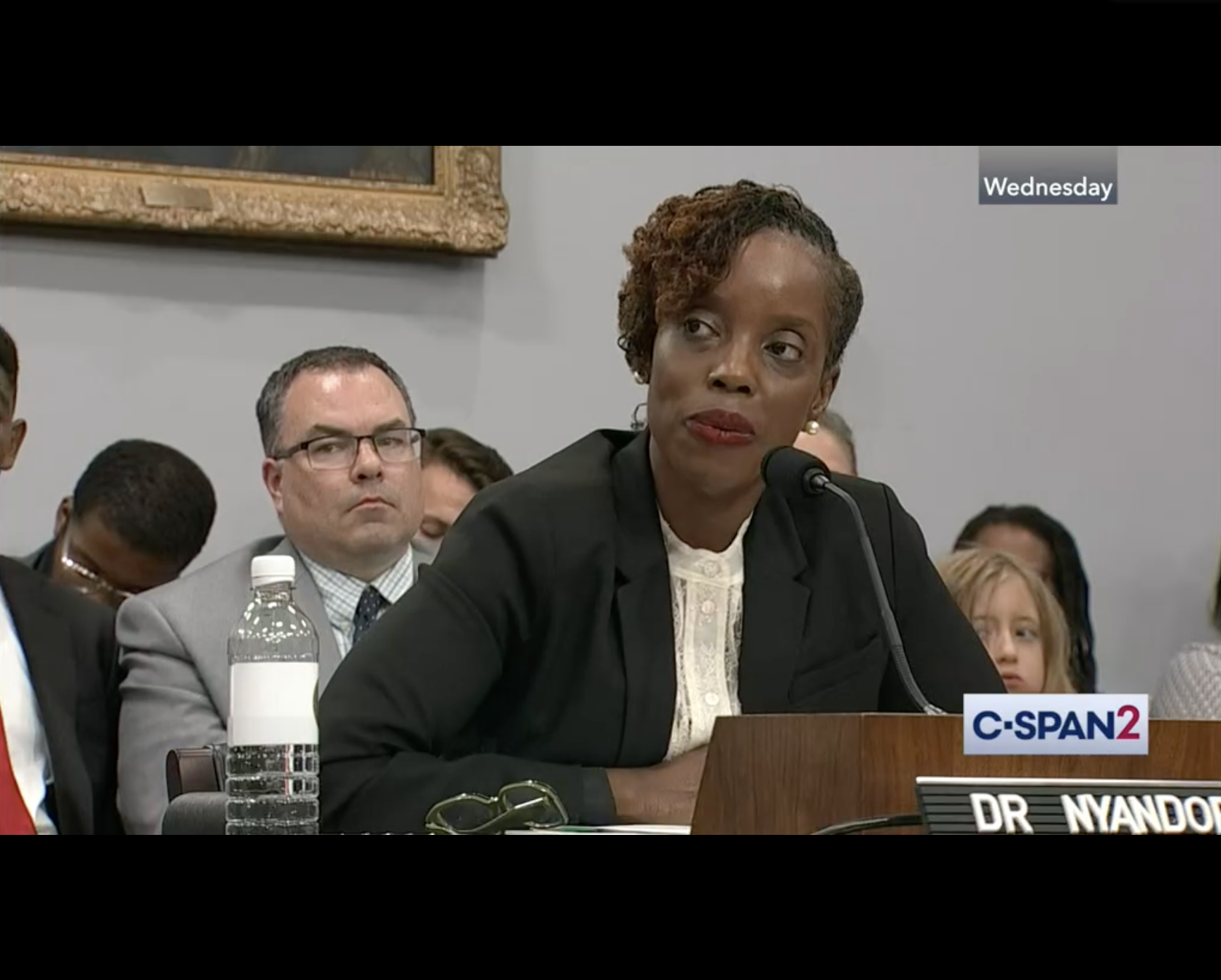
Why Must Puerto Ricans Always Be Resilient?


Yarimar Bonilla, the director of Centro (the Center for Puerto Rican Studies at Hunter College), argues that the devastation wrought by Hurricane Ian is a failure of infrastructure as much as a natural calamity. The failure of privatized utilities to meet basic needs should not fall on the resilience of the population. “We need our government infrastructure to be as resilient as we are forced to be.”

Read more in the New York Times opinion essay.