
ELC welcomes Robert Kim as Executive Director


The Education Law Center has announced the appointment of Robert Kim as the organization’s new Executive Director. Founded in 1973, the Education Law Center serves as the leading voice for New Jersey’s public school children and has become one of the most effective advocates for equal educational opportunity and education justice in the United States.

Mr. Kim has engaged in civil and education rights law and policy for more than 25 years, including as staff counsel at the American Civil Liberties Union of Northern California, senior policy analyst at the National Education Association, and Senior Counsel and Deputy Assistant Secretary for Strategic Operations and Outreach in the Office for Civil Rights (OCR) at the U.S. Department of Education during the Obama Administration. In 2020, he reviewed education and civil rights issues for the Biden-Harris Presidential Transition Team.

Learn more here.

Why Must Puerto Ricans Always Be Resilient?


Yarimar Bonilla, the director of Centro (the Center for Puerto Rican Studies at Hunter College), argues that the devastation wrought by Hurricane Ian is a failure of infrastructure as much as a natural calamity. The failure of privatized utilities to meet basic needs should not fall on the resilience of the population. “We need our government infrastructure to be as resilient as we are forced to be.”

Read more in the New York Times opinion essay.

Oakland high school students are being set up for failure. ‘Dumping the D’ can help


Student leaders from Energy Convertors, founded by Charles Cole III, launched the “Dump the D” campaign to raise awareness about a crucial grade rule that prevents many youth of color from entering four-year colleges.

University of California and Cal State University, two of the largest university systems in the nation, require that high schoolers achieve a passing grade on each of their core academic courses. Since the mid-1990s, UC and CSU have designated a passing grade to be a C or above.

However, many districts, including Oakland Unified School District, continue to count a D as passing. That means a student can get what the school tells them and what they think are passing grades in core courses across four years of high school, only to find out they are disqualified from getting into UC or CSU.

Just 35% of Black students and 47% of Latinx students in Oakland completed the requirements needed for admission to the state’s four-year public universities, according to publicly available data. Meanwhile, 80% of white students meet the standard in Oakland.

With so much talk about building bridges to college and careers, this inconsistency means that many students are unwittingly walking the plank as they exit high school.

Read the full op-ed in the SF Chronicle or via Apple News.

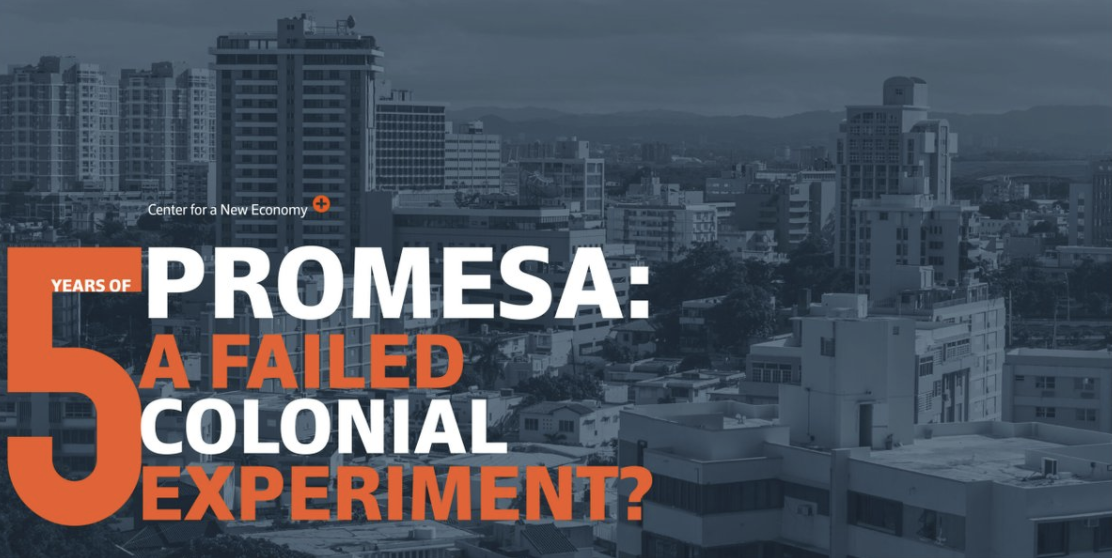
Critics say Puerto Rico's bankruptcy deal will endanger funds for public services


Puerto Rico declared bankruptcy four years ago. Officials and creditors have reached a deal, and a federal bankruptcy judge is considering whether to approve it. But what are possible repercussions for the people of Puerto Rico?

Daniel Santamaria Ots is an economist with Espacios Abiertos, a pro-transparency group in San Juan. He thinks the oversight board could have negotiated more aggressively with the banks and hedge funds that own most of Puerto Rico's bonds. They bought up those bonds for a fraction of their full value after Puerto Rico defaulted and after Hurricane Maria.

Read more and listen to the full story on NPR.

Efficacy Before Scale framework (Article Also in SSIR’s “Essentials” ebook)

 
SSIR-logo.png


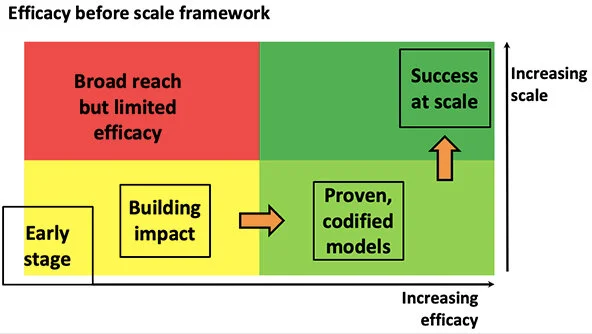
An article by John Newsome, Igor Rubinov and Aneesha Capur in the Stanford Social Innovation Review (SSIR), lays out the “efficacy before scale” framework. To invest in and grow promising organizations and programs in a way that promotes efficacy prior to significant scaling and expansion, there are three pathways to follow: piloting, testing, and iterating. The article lays out valuable case examples from Mission Asset Fund, Working America and Nurse Family Partnerships showing notable impact after following one of pathways to scaling with efficacy.

Efficacy-Before-Scale-Visual-592x334.jpeg

The key to this “efficacy before scale” approach is a three-step process:

  1. Build the prototype to demonstrate (early) results: Experiment, test, and refine programmatic approaches based on evidence, feedback, and clear metrics

  2. Refine and “prove” the case: Codify the model to determine which elements can and must be replicated, guided by data and metrics, and develop “proof points” to show significant impact with chosen populations or target areas

  3. Plan to scale: With clarity on effectiveness and replication, develop plans for expansion, replication, and/or dissemination, built on strengths of the refined model

Read the full article here.

Learn more about other PEG Publications.

I was apathetic about gun violence -- until my 6-year-old son was killed

 
cnn opinion.jpeg
 

Nicole Hockley, co-founder and managing director of Sandy Hook Promise, seeks to spur action to overcome apathy in the face of ongoing gun violence in the US:

We must take action now before the next tragedy strikes. We need to expand background checks for all gun purchases before more innocent people -- who want nothing more than to go to school, pick up a gallon of milk, or visit a house of worship -- are murdered.

These steps, while commendable, will not be enough. Americans need Congress to vote on common sense gun reform, to achieve things like universal background checks and stopping the sale of assault weapons. Voters need to hold lawmakers accountable.


Read more of the CNN editorial here.

Planned Parenthood reckons with legacy and advances racial equity

 
planned-parenthood-federation-of-america-inc-logo-vector.png
 

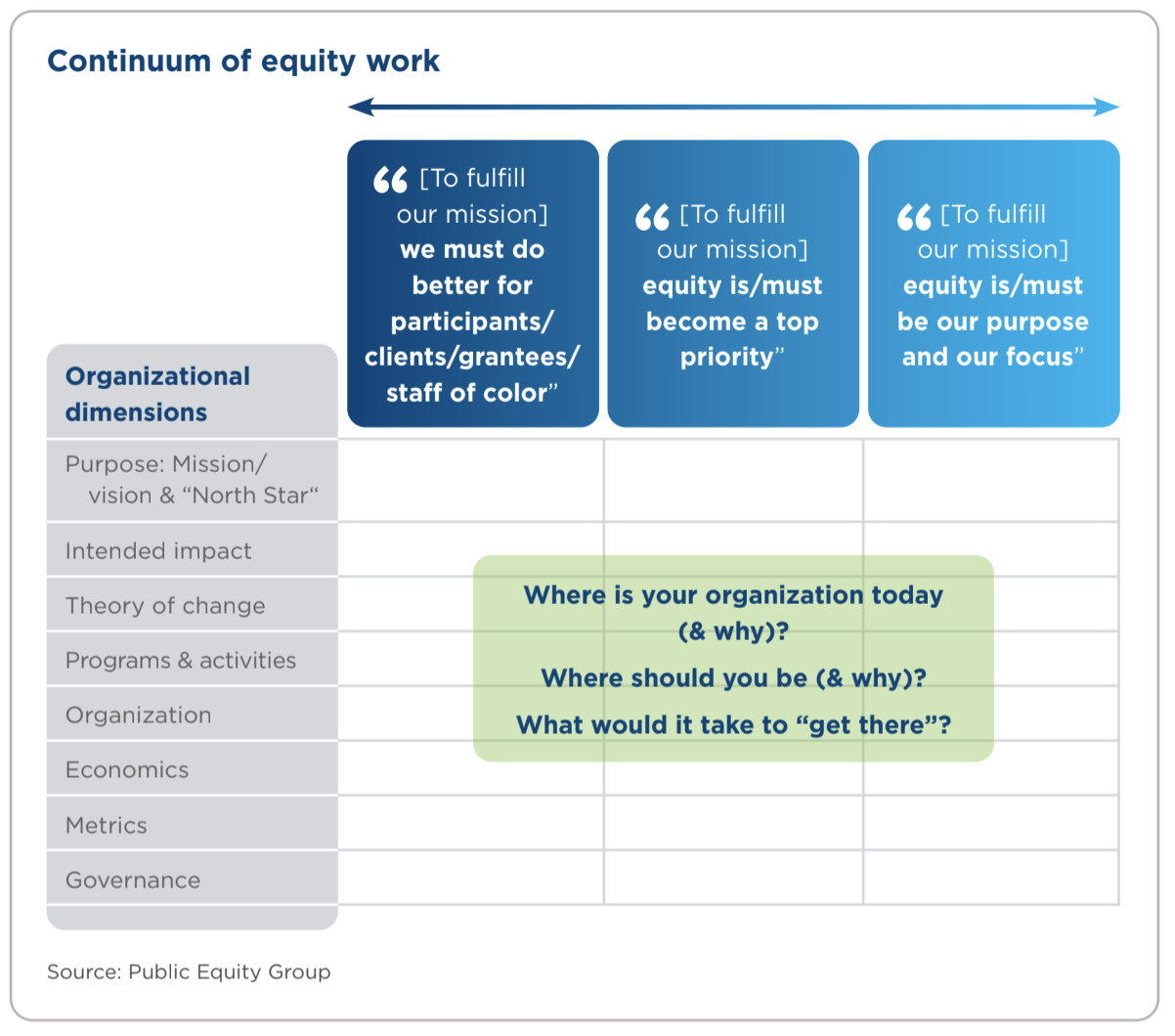
PEG is proud to stand with Planned Parenthood Federation of America in addressing their history and implications for their work:

“Planned Parenthood is taking [racial equity] work seriously. Our senior leadership team is diverse. We have invested in training designed to give everyone, from the board room to the exam room, a foundational understanding of how race operates. And we are establishing new diversity, equity and inclusion standards for affiliates seeking to be a part of the Planned Parenthood Federation.”

Read the full opinion essay by Alexis McGill Johnson, the president and chief executive of the Planned Parenthood Federation of America, in the New York Times.