

PEG clients, Center For A New Economy (CNE) and Espacios Abiertos (EA), have launched The Puerto Rico Recovery Fund
John Newsome Interview With UC Berkeley
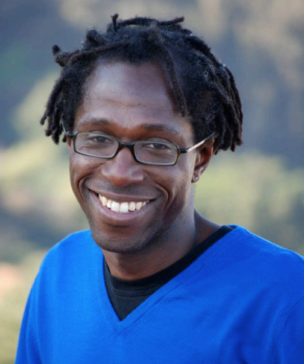
John Newsome was active in the freedom to marry movement through regional activism in the San Francisco Bay Area and Northern California and on a broader stage in the Civil Marriage Collaborative. The excerpts below are part of John’s full interview with the UC Berkeley Oral History Center, in which Newsome discusses his upbringing, coming to terms with his homosexuality, education, and political awareness.
He worked on the ‘And Castro for All’ campaign which addressed racial bias in San Francisco gay bars and then on the outgrowth of that campaign, ‘And Marriage for All,’ which sought to mobilize communities of color around marriage equality.
Download a PDF of John’s full interview here
Childhood:
“My upbringing was complicated… While my mother was raised upper middle class, which was unusual for a black family in the thirties… my father was raised very, very poor, and joined the military as a way to get the GI Bill and go to college … I think, in hindsight, it was a tremendous achievement that he went to college, went to law school. He eventually succumbed to alcoholism, and there was a whole downward spiral, and they divorced, and by the time I was a kid we were struggling ….”
“The year after I started kindergarten [my school] created a Spanish immersion program. My mother was one of the founders. I spent my elementary years… in full-time Spanish instruction… In hindsight, I think my perspective is very rooted in the multicultural exposure that I had then… I was also in a very Jewish community, so identified closely with my Jewish friends. And then ended up taking karate as I approached middle school, and so I was a hodgepodge of all of these different identities, and still am in some ways.”
“My parents were very connected to black culture and community, in ways that I didn’t fully understand until I got much older. I learned just before my father died that he had been the vice president of SNCC [Student Nonviolent Coordinating Committee] at Howard when he was in law school, and my mother had chosen to teach at the University of DC because it was a black university…. I was surrounded by black faculty, black professionals from Howard… I took that for granted growing up. At the same time, I was in schools that had newly desegregated, where a lot of the black students were trapped and ostracized… I experienced a lot of, in hindsight, trauma around being black, and being targeted for speaking white, or being more academic. I played the violin. I think people could tell that I was gay. And I didn’t have a very positive experience.”
Early “consulting”:
“I worked at Stanford for a couple of years … My role was created as a result of a conversation between the President of the university and the mayor of East Palo Alto because Stanford had a long history in East Palo Alto of creating [bad] volunteer programs… My job was to work with students and faculty and community and alums to really understand what it means to be a good partner, and to build programs that were as respectful and rigorous and impactful as possible, which is actually what I do to this day.”
Intersectional Black & LGBT community work:
“Somewhere around probably ’05 or ’06 I was invited to join the Civil Marriage Collaborative [co-leaders the marriage equality movement, with Evan Wolfson/Freedom to Marry] as an advisor. I was a community voice… with stronger linkages in communities of color, hopefully, also someone who works in strategy, and advised as… funders looked at the different policy opportunities… and made investments on a state-by-state basis, in infrastructure, in education program, and campaign…”
“I was asked sometime in the summer [of 2008] if I would consider being field director for the No on Prop 8 campaign, and that was the first sign for me that we probably weren’t on track, because I think that was June, and June is really late to be hiring a field director for a massive statewide campaign. So that was concerning… [Instead a colleague and I] laid out strategy [to] enlist African American LGBT couples and individuals, train them… so they could be [media] spokespeople, organize education events in partnership with clergy and community leaders, write op-ed pieces. An effort to educate the California electorate, and the California public, about the importance of marriage equality [to communities of color].”
Consulting career:
“I care deeply about justice issues, and that will never change. I think the best way for me to play a role is in my day job, as an advisor [rather than an activist]. I work with organizations that are doing, I think, some of the most important work in the world, and I think I can empathize, I think I can bring a set of weird analytic tools [to] nonprofits and community-based organizations…”
A Time to Heal: From Generation to Generation
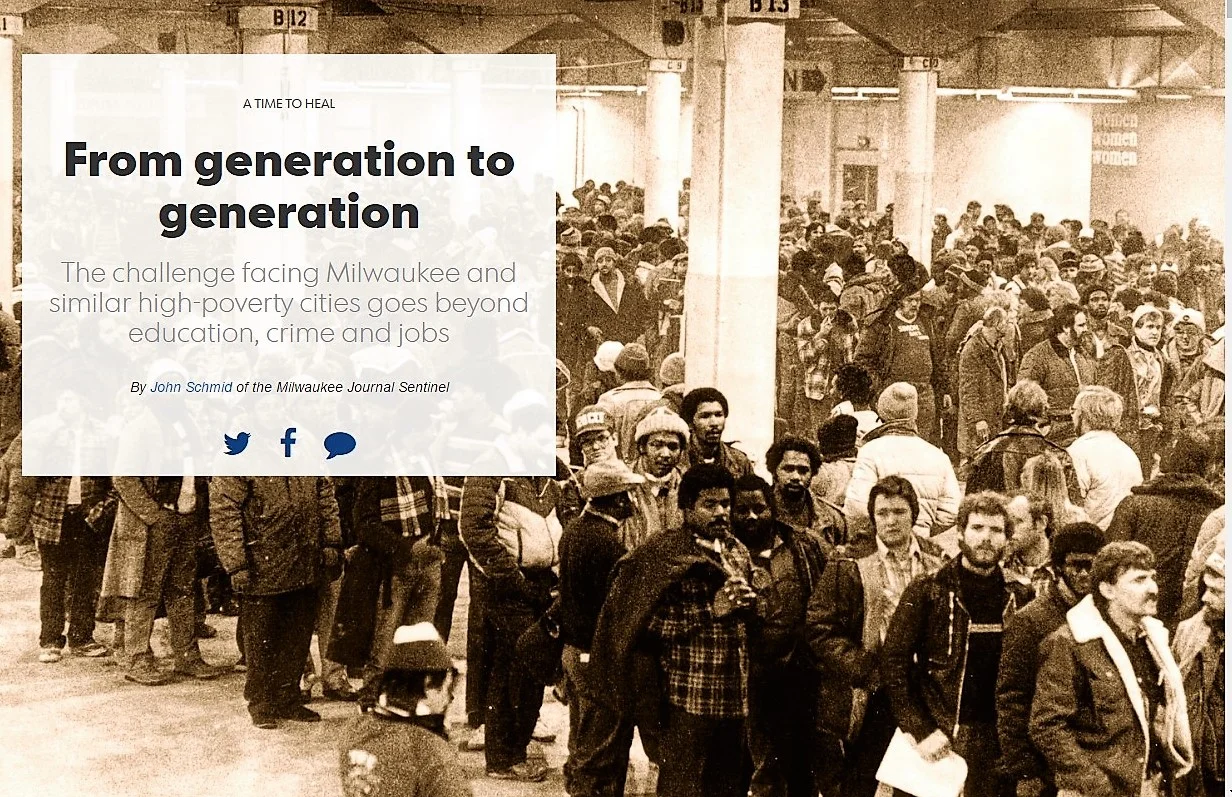
MKE Journal Sentinel launches series on racial equity (supported by the Greater MKE Foundation) [Read More]
Buffett Institute, Gallup issue groundbreaking report

A new study from the Buffett Institute & Gallup reveals the vast majority of Nebraskans value and support early care and education [Read More]
Junte para apoderar a nuestros ciudadanos
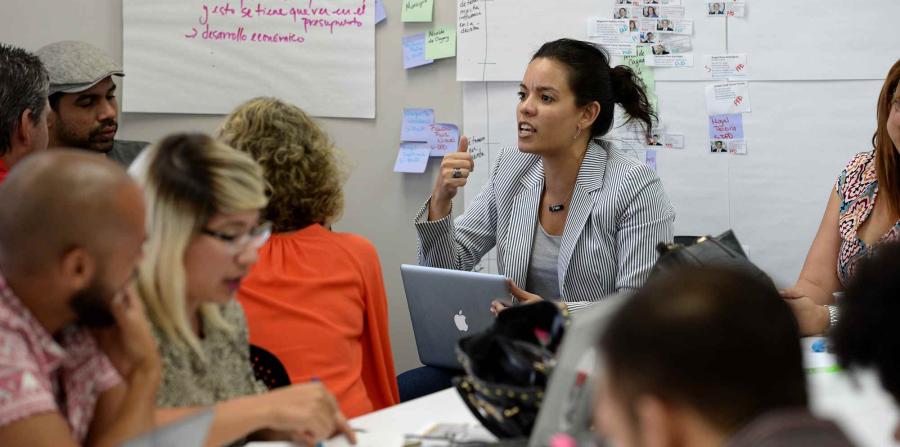
Miembros de Una Sola Voz, trabajando en oficina de Espacios Abiertos. (André Kang)
Can philanthropy pull a country divided along racial lines closer together?
San Francisco Business Times: Can Philanthropy Pull a Country… Closer Together? [Read More]
Scholars program helps black students in Alameda County

Oakland Tribune: Scholars Program Helps Black Students Cedric Brown stood onstage Monday night, next to a large cutout of President Barack Obama, and made a confession [Read More]
San Francisco Foundation to tackle Bay Area “challenges” involving race, economic exclusion
San Francisco Business Times: Foundation to tackle… “challenges” involving race, economic exclusion [Read More]
Creating a Strategic Plan to Win Marriage Equality: A Freedom to Marry Guide

In 2007, John Newsome teamed up with Freedom to Marry founder Evan Wolfson and colleague Roey Thorpe to develop a guide for civil rights leaders: “Creating a Strategic Plan to Win Marriage Equality: A Freedom to Marry Guide.”
SF Chronicle: Glide Church + The SF Foundation Team Up
SF Foundation hosts fest, drafts plan to tackle wealth disparity
By Carolyn Said
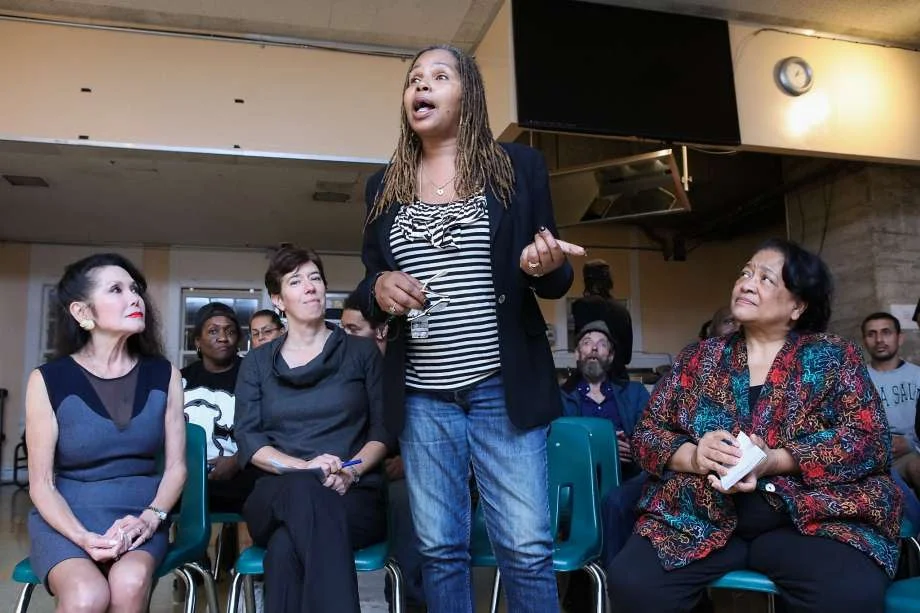
Photo: Gabrielle Lurie, Special To The Chronicle
Angela Coleman (center) discusses how the programs at Glide Memorial Church have transformed her life, due, in part to Glide co- founder, Jan Mirikitani (left) in San Francisco, California on Thursday, September 17, 2015. Jan Mirikitani will be receiving a Community Leadership Award from the San Francisco Foundation at Bay Area Bold.
While the Bay Area enjoys unprecedented prosperity, the chasm between rich and poor has grown to alarming dimensions, with minorities especially marginalized.
Now the San Francisco Foundation, one of the nation’s oldest and largest community foundations, is preparing to marshal its considerable resources to address this disparity. It’s drafting a proposal to reduce the wealth gap and plans to expand from its traditional grant-making role by advocating policy changes and bringing together key people from the public and private sectors.
“We can embark on a path to create a climate of greater economic and racial inclusion so that race, economic status and ZIP code will no longer determine one’s future and opportunities for success,” said CEO Fred Blackwell, 45, who took over last year as head of the 67-year-old foundation.
In one of its first hands-on endeavors, the foundation will host an event at Yerba Buena Center for the Arts called Bay Area Bold on Friday and Saturday, designed as both a call for collective regional action and a celebration of creativity and the arts. Friday will include a summit with TED-style talks, panels and presentations for paying guests. Saturday’s all-day free festival will feature music, dance, film and interactive performances.
On Saturday, the foundation will also honor four community leaders with awards of $10,000 each. One is Janice Mirikitani, co-founder of the Glide Foundation at Glide Memorial Church, a mainstay in the Tenderloin, where it provides food, education, recovery support, temporary housing and other services.
While Mirikitani is most known for her social justice activities, the award recognizes her artistic achievements. A poet laureate of San Francisco, she’s also involved in the visual arts.
Her face lit up last week as she showed off huge portraits at Glide of homeless people and their pets. “Pets have saved their lives,” she said. “Everyone can relate to loving your pets, so it’s a way of reminding everyone of our common humanity and of revealing their voices.”
Blackwell visited Glide last week and told a few dozen people who gathered after their free lunchtime meal about Mirikitani’s award, eliciting whoops and hollers that echoed through an institutional room decorated with mobiles and posters. Several rose to their feet to tell Blackwell about their lives and what brought them to Glide.
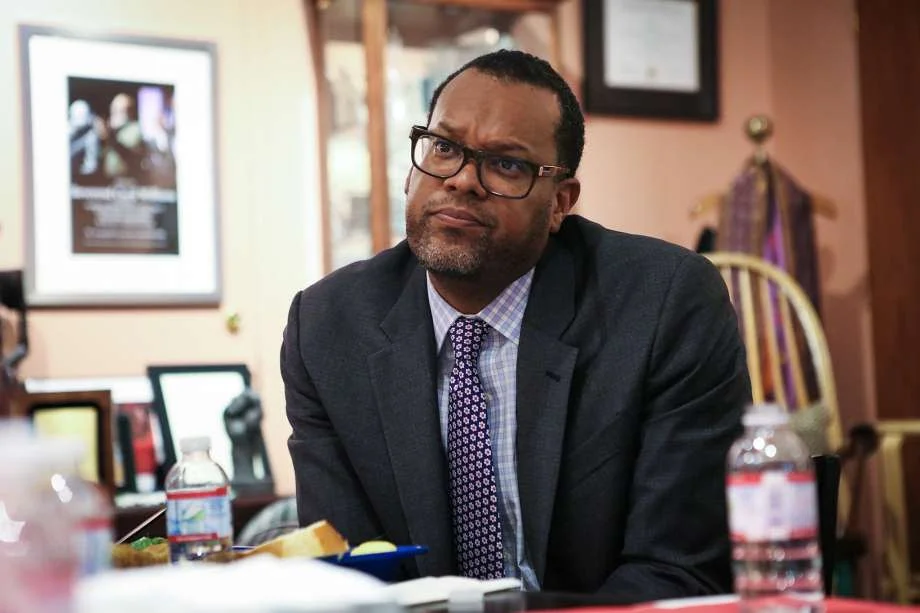
Photo: Gabrielle Lurie, Special To The Chronicle
Fred Blackwell, CEO of the San Francisco Foundations listens to ideas on equity during a meeting held at Glide Memorial Church in San Francisco, California on Thursday, September 17, 2015.
“I’m a broken individual,” said one man, identifying himself as 18 months cocaine-free. “I get my repairs from Glide.”
Afterward, Blackwell sat down to lunch with Mirikitani, husband the Rev. Cecil Williams — Glide’s co-founder — and Glide senior staff, and explained what spurred the foundation’s single-minded focus.
He and his staff conducted seven months of “listening sessions” to draw comments from more than 1,000 Bay Area residents on the region’s challenges, he said. Hearing so many accounts of people’s struggles to make ends meet inspired the foundation to hone its mission.
“It’s not a pivot, because we’ve always been social justice focused,” Blackwell said. But the goal now is to “move the needle” in closing the gap. “Our north star is to address barriers to opportunity based on race, income and where you live.”
He’s got a lot to work with. The foundation has $1.3 billion in assets. Of that, $800 million is endowed money that it decides how to spend, while $500 million is in donor-advised funds — money from living grantors who decide where, when and how to distribute it, with the foundation just writing the check. The foundation handles about 500 such funds for about 700 individuals. Such funds have generated some controversy, because donors get an immediate tax write-off, but can delay actually giving the money.
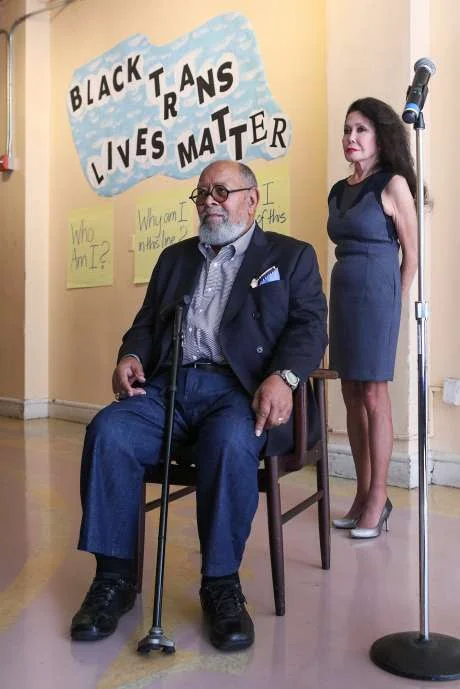

Photo: Gabrielle Lurie, Special To The Chronicle
Reverend Cecil Williams and Jan Mirikitani listen as clients discuss the positive impact that Glide Memorial Church has had on their lives, in San Francisco, California on Thursday, September 17, 2015. Jan Mirikitani will be receiving a Community Leadership Award from the San Francisco Foundation at Bay Area Bold.
That half a billion dollars represents a huge resource. “It’s an opportunity we have to motivate, incentivize donors to join us in the equity journey,” he said. “Someone who wants to do good, we can advise them, align them with objectives we want to achieve.”
One such person anonymously gave the foundation $34 million this year to address needs in Oakland. That gift, distributed in July to about 15 nonprofit groups, could create 2,502 jobs and 731 units of affordable housing.
Housing continues to loom as a formidable issue throughout the Bay Area.
“Affordable housing is as close as you can get to rocket science,” Blackwell said, asking Glide executives about the housing situation of its free-meal recipients.
“Half of the people who eat here are housed; it used to be 90 percent homeless,” said Kristen Growney Yamamoto, Glide co-executive director. In surveys, they say they need the free meals so they can afford their rent.
Many clearly are the working poor. “We see people in uniforms (from their jobs) in our lines on their lunch break,” said Kyriell Noon, a Glide program director.
Blackwell said he sees Glide as a model for what the foundation hopes to achieve.
“You move people from volunteerism to action, from social service to social change,” he said. “There’s been a lot of hand-wringing about what’s wrong. Now we want to make the transition into doing more to make it right.”
Carolyn Said is a San Francisco Chronicle staff writer. E-mail: csaid@sfchronicle.com Twitter: @csaid